The Power of Compound Interest: How ETFs Can Make You Wealthy Over Time
Most people don’t realize how small investments can turn into massive wealth through compound interest. ETFs are the easiest way to take advantage of this financial superpower. In this guide, learn how to maximize compounding, which ETFs to buy, and how to build long-term wealth with minimal effort. 🚀
INVESTING IN ETF
Christopher Skyler
12/15/20244 min read
Why Most People Underestimate the Power of Compounding
Most people think investing is about making quick profits—buying low, selling high, and timing the market. But the real secret to wealth-building isn’t about making the perfect trade.
📌 It’s about time, consistency, and compound interest.
Albert Einstein supposedly called compound interest “the eighth wonder of the world.” Why? Because it allows small investments to grow into massive wealth—without doing any extra work.
And the best way to take advantage of this financial superpower? Investing in ETFs.
In this guide, you’ll discover how compound interest works, why ETFs are the perfect vehicle for compounding, and how to build long-term wealth effortlessly.
1. What is Compound Interest (And Why Should You Care)?
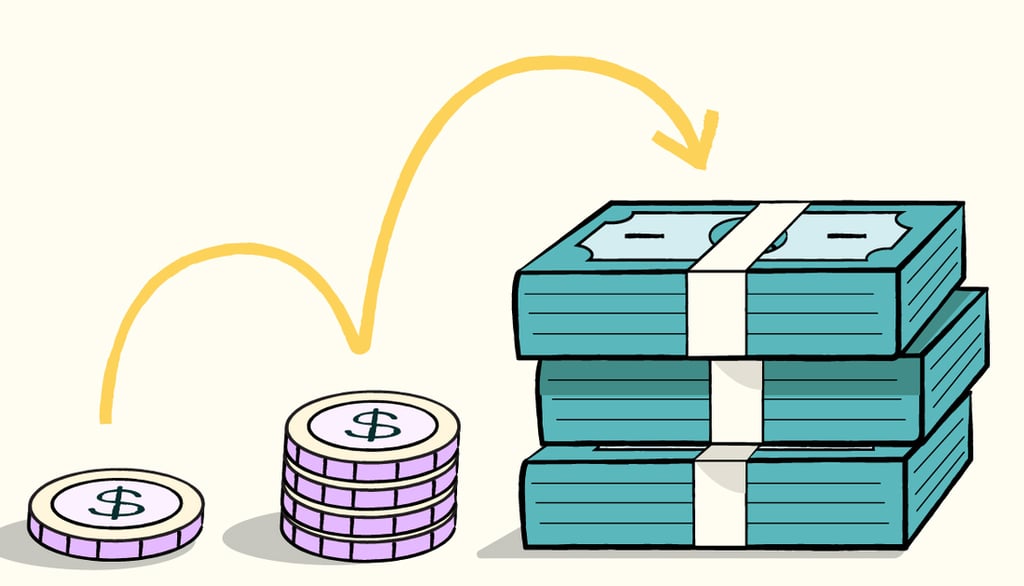
📌 Compound interest is when your money earns money—and that money starts earning more money.
Think of it like a snowball rolling down a hill. It starts small, but as it rolls, it grows bigger and faster.
Example: The Power of Compound Growth
Let’s say you invest $500 per month in an ETF that grows at 10% per year (the historical return of the S&P 500).
Here’s what happens over time:
10 years → $103,000
20 years → $360,000
30 years → $1.1 million
40 years → $3.1 million
💡 Notice how your wealth doesn’t just double—it multiplies exponentially.
👉 The longer you stay invested, the more powerful compounding becomes.
2. Why ETFs Are the Perfect Tool for Compound Growth
📌 ETFs (Exchange-Traded Funds) are one of the best ways to maximize compound interest. Why?
✅ Diversification – You own hundreds of stocks in one fund, reducing risk.
✅ Low Fees – Actively managed funds charge high fees that eat into your returns. ETFs keep costs low.
✅ Automatic Growth – ETFs track the market, which historically goes up over time.
Best ETFs for Compound Growth
📌 S&P 500 ETFs (Long-Term Wealth Growth)
VOO (Vanguard S&P 500 ETF)
SPY (SPDR S&P 500 ETF)
IVV (iShares S&P 500 ETF)
📌 Total Market ETFs (Even More Diversification)
VTI (Vanguard Total Stock Market ETF)
SCHB (Schwab U.S. Broad Market ETF)
📌 Dividend ETFs (Earn Passive Income + Growth)
VYM (Vanguard High Dividend Yield ETF)
SCHD (Schwab U.S. Dividend Equity ETF)
💡 ETFs make compounding easy by reinvesting profits and growing your wealth automatically.
👉 The key? Buy and hold. The longer you stay invested, the more you benefit.
3. How to Maximize Compound Growth with ETFs
📌 Compounding works best when you follow these simple rules:
1. Start Investing as Early as Possible
The earlier you start, the more time your money has to compound.
Example:
If you invest $200/month at age 20, you’ll have $1.5 million by age 65.
If you wait until age 30, you’ll have only $820,000.
If you wait until age 40, you’ll have only $400,000.
💡 Starting 10 years earlier can mean the difference between a few hundred thousand and millions.
👉 The best time to start was yesterday. The second-best time is today.
2. Reinvest Your Dividends
Many ETFs pay dividends, which is money companies distribute to shareholders.
Instead of spending these dividends, reinvest them automatically so they start compounding too.
📌 How to Reinvest Dividends:
✅ Set up Dividend Reinvestment Plans (DRIPs) in your brokerage account.
✅ Choose ETFs that pay dividends consistently (like VYM or SCHD).
💡 Reinvested dividends add thousands to your total returns over time.
3. Invest Consistently (Even When Markets Drop)
Many people panic during market downturns and stop investing—which is a huge mistake.
📌 The best strategy? Keep investing no matter what.
This is called Dollar-Cost Averaging (DCA)—investing a fixed amount every month, no matter what’s happening in the market.
Example:
If the market is high, you buy fewer shares.
If the market is low, you buy more shares at a discount.
Over time, this lowers your average cost and boosts your returns.
💡 The stock market has always recovered from downturns. Staying invested is how you win.
4. Avoid High Fees & Bad Investments
📌 Fees are the silent killer of compounding.
Even a 1% difference in fees can cost you hundreds of thousands of dollars over time.
Example: If you invest $100,000 with a:
0.03% ETF fee → You pay $30 per year.
1.5% Mutual Fund fee → You pay $1,500 per year!
💡 Stick to low-cost ETFs to maximize compound growth.
4. The 3 Rules of Building Wealth with ETFs
📌 If you want to get rich through compounding, follow these rules:
Rule #1: Stay Invested for the Long Haul
✅ Don’t try to time the market.
✅ Ignore short-term fluctuations—think in decades.
✅ The longer you hold, the more powerful compounding becomes.
💡 Warren Buffett’s advice? “The stock market is designed to transfer money from the impatient to the patient.”
Rule #2: Invest Regularly (No Matter What Happens)
✅ Use Dollar-Cost Averaging—invest every month, no matter what.
✅ Don’t wait for the "perfect" time—just start.
✅ Keep investing during downturns—bear markets create millionaires.
💡 Consistency beats market timing every time.
Rule #3: Let Your Money Work for You
✅ Reinvest dividends—don’t cash them out early.
✅ Avoid high fees and actively managed funds.
✅ Stay patient—the first 10 years feel slow, but then compounding explodes.
💡 Your money will work for you—if you give it time.
Final Thoughts: Start Compounding Today & Watch Your Wealth Grow
📌 Compound interest is the closest thing to financial magic. The sooner you start, the more money you’ll have working for you.
🚀 How to Get Started Today:
✅ Open a brokerage account (Vanguard, Fidelity, Schwab).
✅ Buy a low-cost ETF (S&P 500, Total Market, Dividend ETFs).
✅ Set up automatic monthly contributions.
✅ Reinvest dividends and stay invested long-term.
💡 Want a step-by-step guide to investing with ETFs?
📖 Get your copy of ETF Handbook for Beginners and start building wealth today!
© 2025 SkylerPublishing.com. All rights reserved.